
𝐌𝐚𝐣𝐨𝐫𝐢𝐭𝐲 𝐨𝐟 𝐅𝐢𝐥𝐢𝐩𝐢𝐧𝐨𝐬 𝐬𝐮𝐩𝐩𝐨𝐫𝐭 𝐜𝐨𝐦𝐩𝐫𝐞𝐡𝐞𝐧𝐬𝐢𝐯𝐞 𝐬𝐞𝐱𝐮𝐚𝐥𝐢𝐭𝐲 𝐞𝐝𝐮𝐜𝐚𝐭𝐢𝐨𝐧 (𝐂𝐒𝐄) 𝐢𝐧 𝐬𝐜𝐡𝐨𝐨𝐥𝐬 – 𝐏𝐮𝐥𝐬𝐞 𝐀𝐬𝐢𝐚
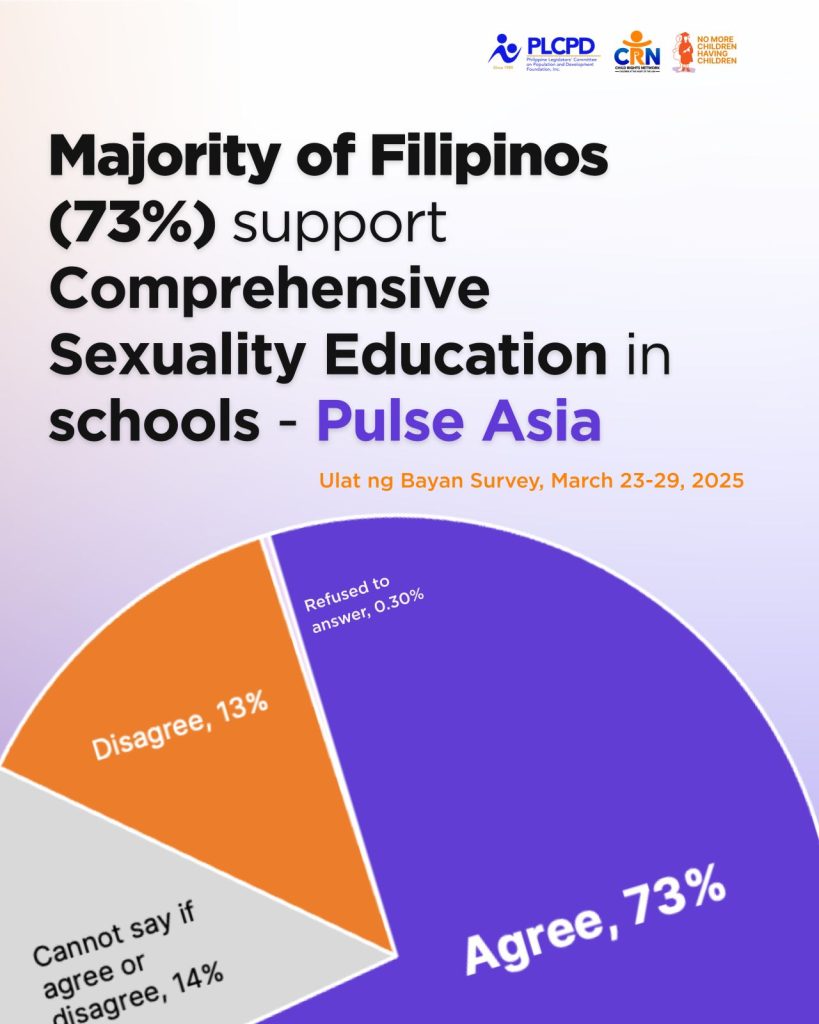
Seventy-three (73%) percent of Filipinos are in favor of teaching concepts of sexuality, sexual health, and family planning in schools in an age-appropriate and culturally sensitive manner to help students make responsible and informed choices.
This is what a Pulse Asia survey conducted in the last week of March 2025 showed.
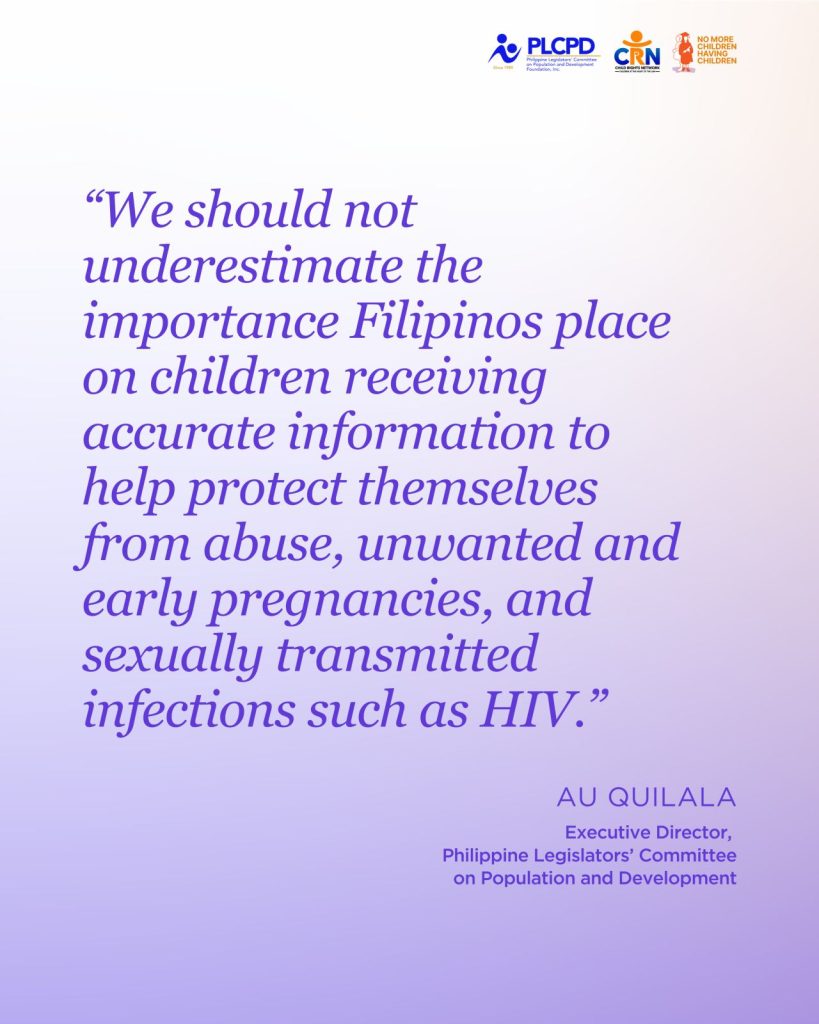
“We should not underestimate the importance Filipinos place on children receiving accurate information to help protect themselves from abuse, unwanted and early pregnancies, and sexually transmitted infections such as HIV,” said Ms. Au Quilala, Executive Director of the Philippine Legislators’ Committee on Population and Development (PLCPD), the advocacy organization which commissioned the Pulse Asia survey in support of human development policymaking.
PLCPD is the Convenor of the Child Rights Network, the largest advocacy alliance of organizations and government agencies pushing for child rights laws in the Philippines.
“What is even more encouraging is the positive outlook majority of Filipinos have in entrusting schools as spaces where children can have responsible discussions about their bodies and relationships,” Ms. Quilala said.
The survey comes at a critical time, as teen pregnancy prevention legislation is being derailed and reproductive health rights are under attack from disinformation campaigns.
These efforts spread rumors and clickbait claims – such as falsely and maliciously alleging that CSE is about teaching childhood masturbation – in order to undermine long studied proposals with strong backing from civil society and the government, including parents and faith-based organizations.
This is also against the background of the rising cases of adolescent pregnancy, particularly among girls aged 10–14 and even younger, which have been increasing in recent years, according to the Philippine Statistics Authority.
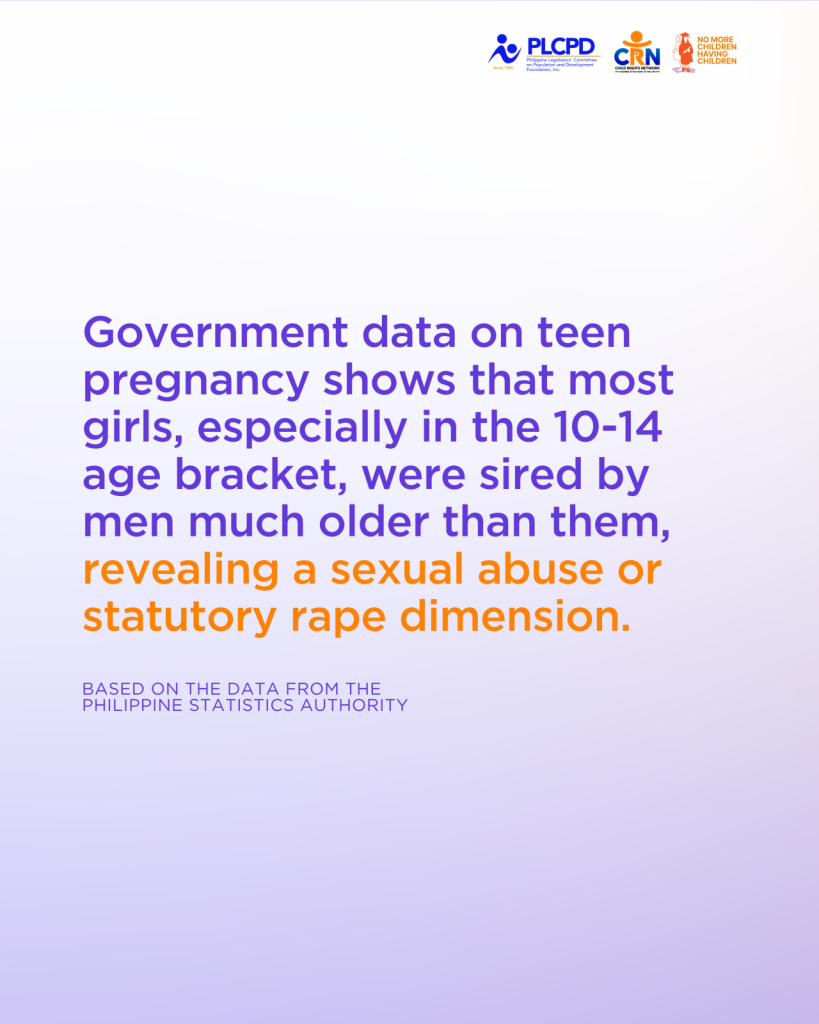
More alarmingly, government data shows that most girls, especially in the 10-14 age bracket, were sired by men much older than them, revealing a sexual abuse or statutory rape dimension.
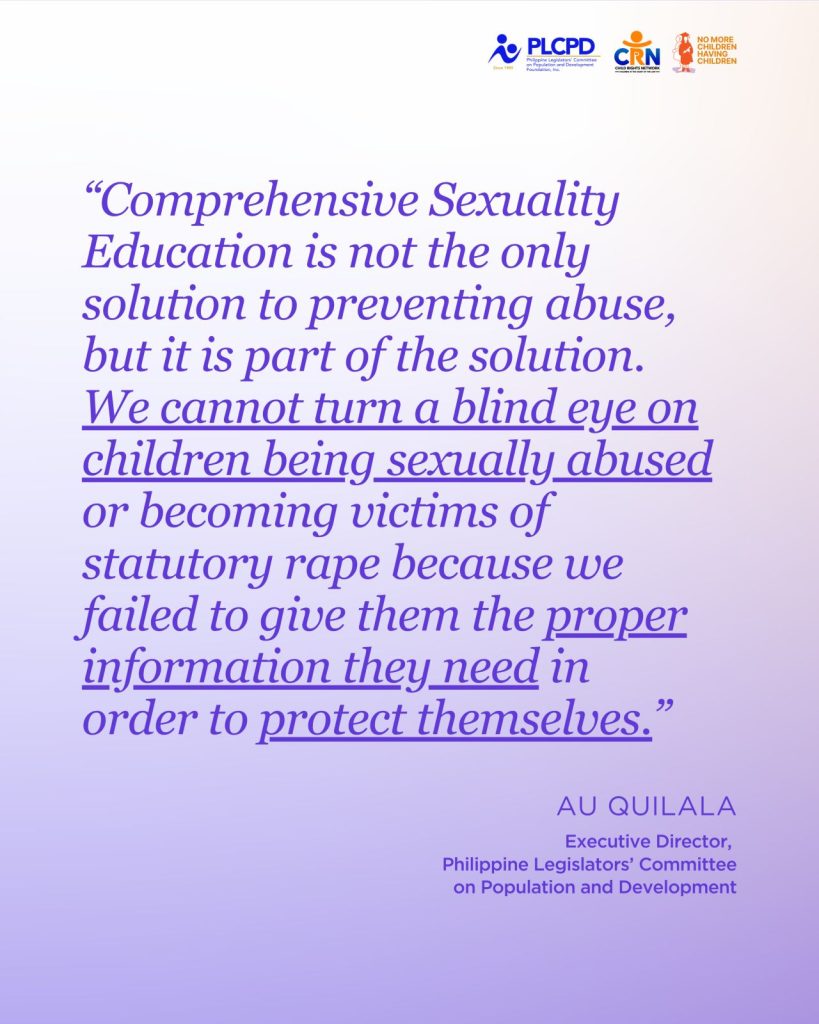
“CSE is not the only solution to preventing abuse, but it is part of the solution. We cannot turn a blind eye on children being sexually abused or becoming victims of statutory rape because we failed to give them the proper information they need in order to protect themselves,” said Ms. Quilala.
𝐏𝐚𝐫𝐞𝐧𝐭𝐬 𝐧𝐞𝐞𝐝 𝐬𝐮𝐩𝐩𝐨𝐫𝐭
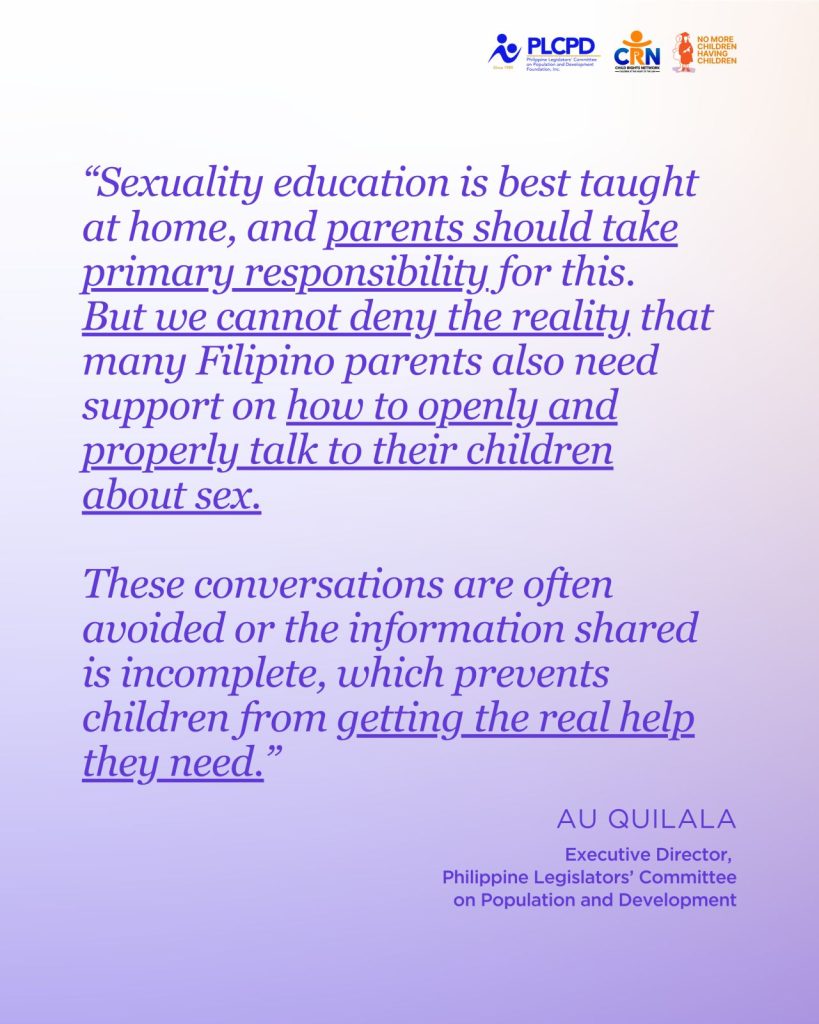
“Sexuality education is best taught at home, and parents should take primary responsibility for this. But we cannot deny the reality that many Filipino parents also need support on how to openly and properly talk to their children about sex. These conversations are often avoided or the information shared is incomplete, which prevents children from getting the real help they need. This is why we see cases of teen pregnancy, HIV, and sexual abuse or statutory rape,” Ms. Quilala said.
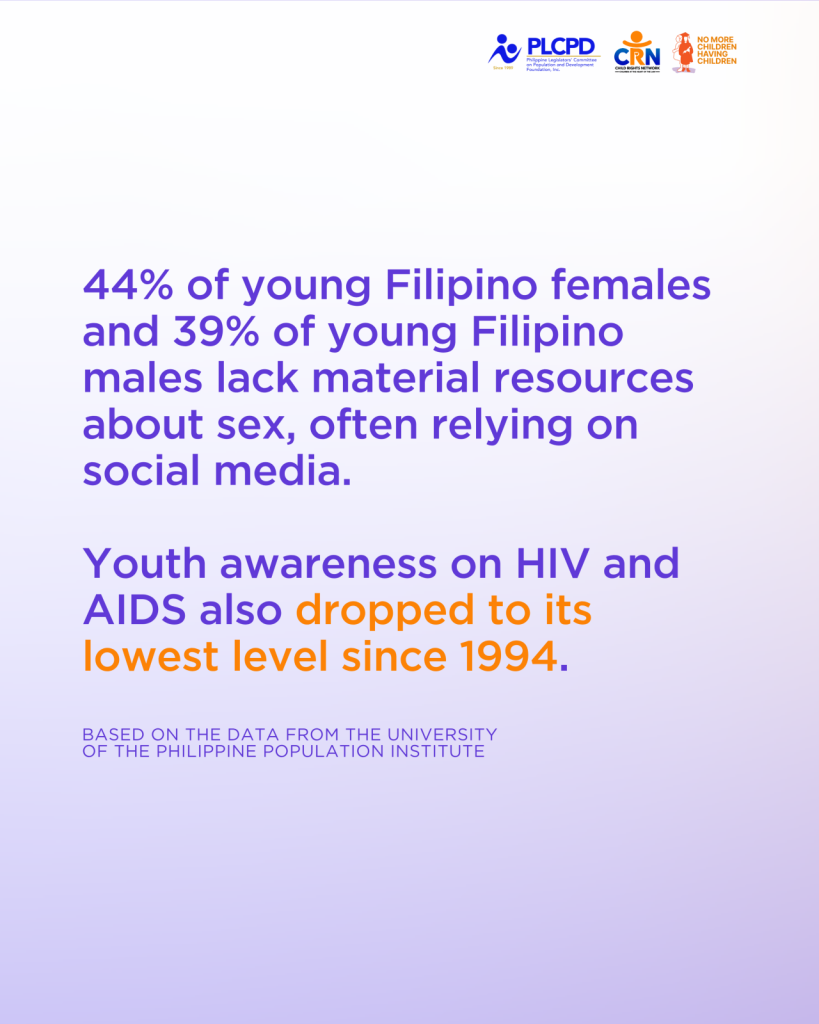
According to a study by the University of the Philippines Population Institute (UPPI), 44% of young Filipino females and 39% of young Filipino males lack material resources about sex, often relying on social media. Youth awareness on HIV and AIDS also dropped to its lowest level since 1994, according to another UPPI study.
“It is much better that children learn about topics such as sexuality and reproductive health in an age‑appropriate and culturally sensitive manner in settings such as schools, rather than picking them up from random sources without any proper guidance from an adult,” said Ms. Quilala, adding that we also need to support the training of teachers because they act as second parents and schools serve as children’s second homes.
Ms. Quilala said that we should trust teachers because even though they are not the biological or adoptive parents, they also carry the duty to protect their students, help them finish their education, and support them in reaching their full potential.
“The Teen Pregnancy Prevention Bill, if passed into law, will complement our existing laws on statutory rape, anti-online sexual abuse and exploitation of children, the prohibition of child marriage, and the Reproductive Health Law — measures that the PLCPD and the Child Rights Network have advocated for,” Ms. Quilala said.
𝐂𝐚𝐥𝐥 𝐭𝐨 𝐥𝐚𝐰𝐦𝐚𝐤𝐞𝐫𝐬 𝐭𝐨 𝐩𝐚𝐬𝐬 𝐓𝐞𝐞𝐧 𝐏𝐫𝐞𝐠𝐧𝐚𝐧𝐜𝐲 𝐏𝐫𝐞𝐯𝐞𝐧𝐭𝐢𝐨𝐧 𝐋𝐚𝐰 𝐧𝐨𝐰
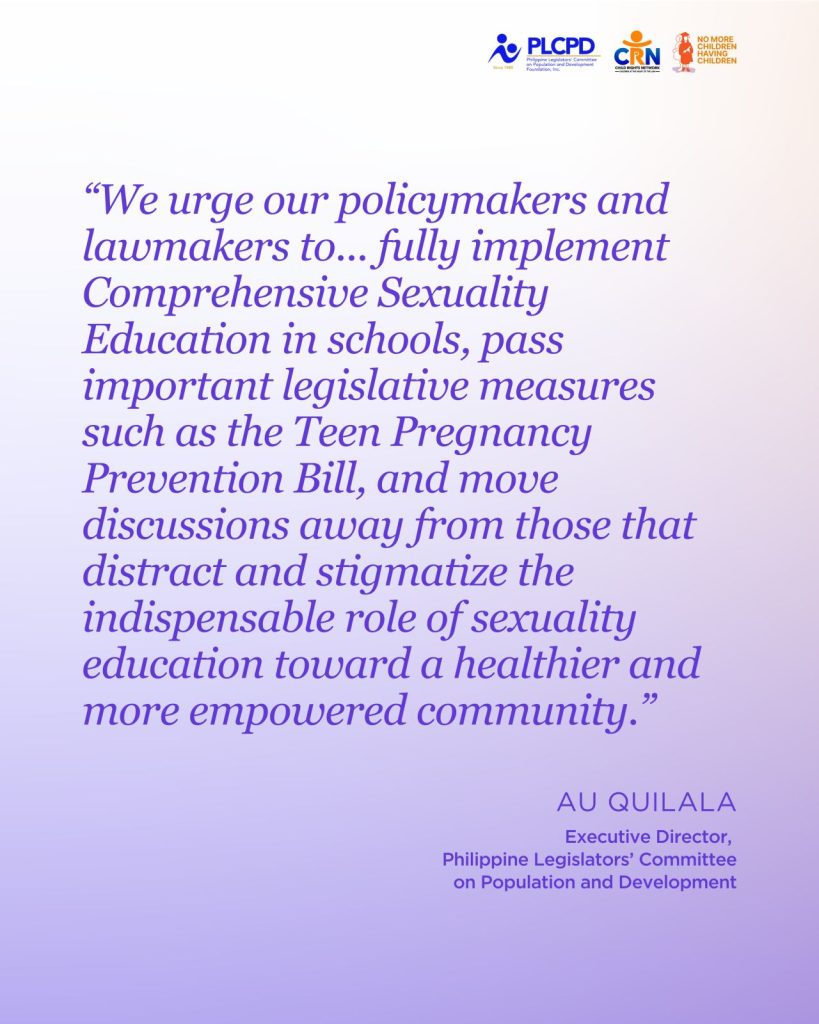
“We urge our policymakers and lawmakers to listen to the insight revealed through the Pulse Asia survey and fully implement comprehensive sexuality education in schools, pass important legislative measures such as the Teen Pregnancy Prevention Bill, and move discussions away from those that distract and stigmatize the indispensable role of sexuality education toward a healthier and more empowered community,” Ms. Quilala said.
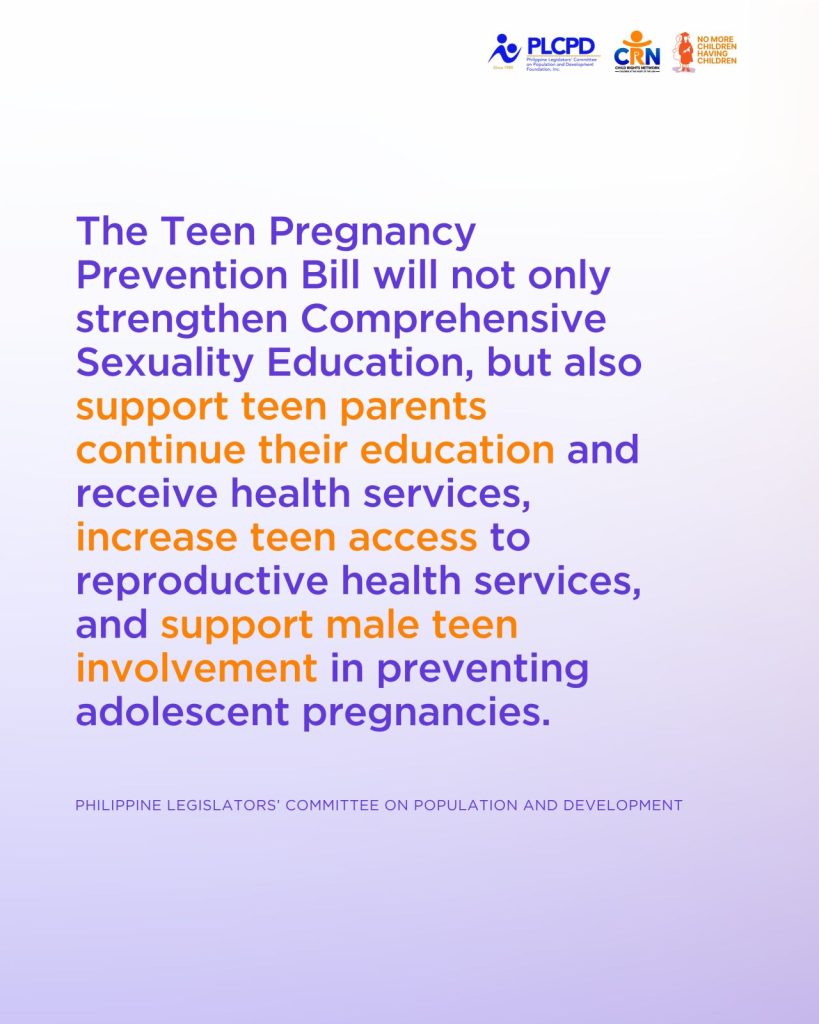
She added that the Teen Pregnancy Prevention Bill, for instance, will not only strengthen CSE but support teen parents continue their education and receive health services, increase teen access to reproductive health services, and support teen male involvement in preventing adolescent pregnancies.
The Pulse Asia nationwide survey was conducted last March 2025, which was within the campaign period for the midterm elections. The overall error margin is ± 4.0 percentage points at the 95% level of confidence.
Respondents were asked if they agreed or disagreed with the statement, “It is important to teach concepts of sexuality, sexual health, and family planning in schools in an age-appropriate and culturally sensitive manner to help students make responsible and informed choices.”
73% agreed, while only 13% disagreed, and another 14% said they cannot say if they agree or disagree.
The Pulse Asia survey is the second public opinion poll that showed a favorable perception for the need for Comprehensive Sexuality Education (CSE), the first one of which that was released was by WR Numero, conducted last April 2025, and showed that 84.5% of Filipinos are in favor of CSE. #
About the Philippine Legislators’ Committee on Population and Development
The Philippine Legislators’ Committee on Population and Development (PLCPD) is a group of forward-looking legislators and advocates committed to working to develop viable, responsive, and people-centered public policies on population and human development.
PLCPD is the Convenor of Child Rights Network (CRN) Philippines, the largest national alliance of organizations and government agencies pushing for child rights laws in the Philippines.